
🎤 Special Interview – Paris Champions Take the Spotlight!
The Parisian FFTCG weekend delivered an incredible showcase of competitive play, bringing together talented players from across Europe. When the dust settled, two representatives of the English scene stood victorious.
🏆 Banira claimed the title at the Paris Materia Cup, while Alex Hancox secured victory at the Paris Local Qualifier held during the same weekend. Two different tournaments, two impressive performances, and one shared achievement: becoming champions on the European competitive stage.
For this special interview, we sat down with both winners to look back on their journeys, their preparation, their deck choices, and the key moments that led them to victory.
Discover the thoughts of two of England’s strongest players as they share their tournament experiences, their vision of the current meta, and their ambitions for the rest of the competitive season.
🎤 Meet Banira – The Paris Materia Cup Champion
Our first stop in this special interview series takes us to Paris, where Banira made his mark by winning the Paris Materia Cup, securing a major victory against some of the strongest players on the European FFTCG scene.
A well-known member of the English community, Banira demonstrated skill, preparation, and adaptability throughout the tournament to claim the top spot. In this interview, he looks back on his journey through the event, his deck choices, the key moments that shaped his tournament, and his thoughts after this impressive achievement.
Discover the insights of a champion who successfully brought his strategy to life and left Paris with another memorable accomplishment added to his competitive journey.
1. Hey! Could you introduce yourself? How long have you been playing FFTCG, and who is behind the username?
Hi! I’m バニラ (Banira), and I’ve been playing FFTCG since Opus XI. Outside of FFTCG, I’m a university student in London, originally from Beijing, China.
2. So, how did your tournament go?
The tournament in Paris was an amazing experience. Just like at every event I’ve attended in Europe, all the players and staff were incredibly friendly and welcoming.
Day 2 felt quite different for me, as it was my first time making the Top Cut, and I was definitely feeling the pressure. Although winning my first two streamed matches gave me a boost of confidence, the Grand Final was by far the most nerve-wracking moment of the weekend. Even after winning the final game, it took me a while to realize what had just happened.
I’d also like to thank the judges, all of my opponents for the fantastic matches, and everyone who came to congratulate me afterward. It truly meant a lot to me.
3. What was the toughest match of the tournament, and why does it stand out compared to the others?
No doubt the second grand-final, my Wind Ice Crystal against Takhano’s Mono Water. The match itself is not that tough for me, since I play my first Seymour and make Takhano have no chance to play his third backup, I was considering I’ll win this game.
However, as everyone who watched the streamed match knows, I didn’t properly announce the effects of Seymour or Edge, as both cards use “up to X” wording. I had always assumed that players would simply resolve the maximum number of effects by default.
At first, I felt the ruling on Seymour was a little unfair, since I wasn’t used to explicitly declaring every part of the effect each time. I believe that no one intentionally plays cards like these without intending to resolve as many effects as possible.
That said, I have no complaints regarding Edge, as the judge had already reminded me about this earlier in the tournament. I’ll definitely keep it in mind from now on—it’s an important lesson to learn.
Even though it turned what should have been a straightforward game into the most stressful match of FFTCG I’ve ever played.
4. Was there a moment when you thought, “It’s over for me”? How did you manage to turn things around?
Yes, when I play the Edge and forget to announce haste, then been confirmed it will have no haste in combat.
I have to thank my girlfriend, because when all of this happened, she put her hand on my shoulder to help calm me down—and it worked. It helped me realize that I still had a chance to win.
I played Viktora and passed the turn. On his next turn, Takhano played Ultros and passed with three blockers (Ultros, Ashe, and 9 CP Leviathan).
On my turn, I played Serjes to remove one of his blockers. Since I had two Crystals and two attackers, I knew I could play Edge twice from the Break Zone if necessary, all just to push through a single point of damage.
At that moment, I finally believed that I had won the tournament.
5. What double-deck were you playing, and why that choice? Was there a card or combo that saved you at some point?
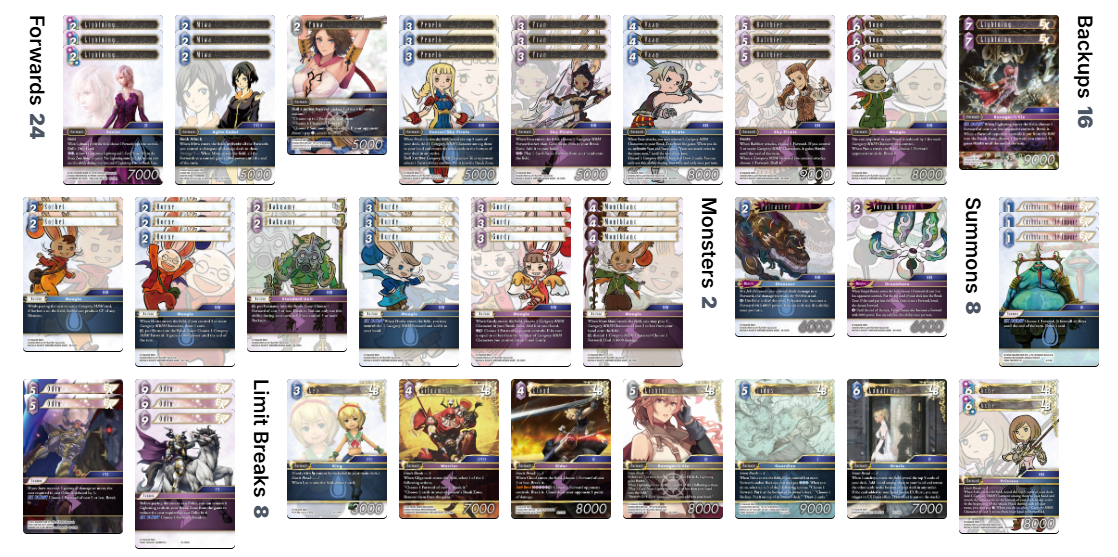
I was playing MBM and Wind Ice Crystal in this tournament.
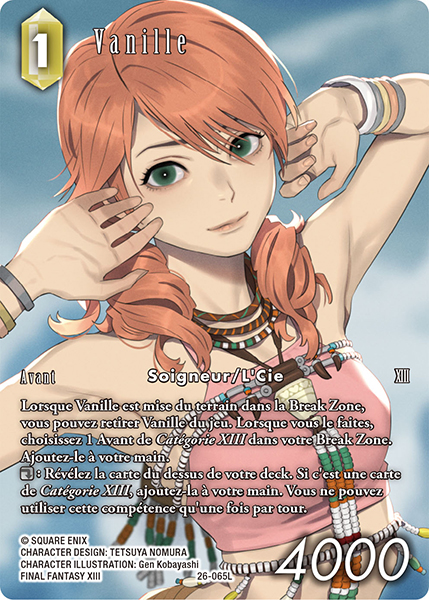
MBM was the first deck I built for Opus XXVIII for several reasons: the cute artwork, and the fact that it was a completely new and ready-to-play archetype.
I almost gave up on the deck once, right before the London Materia Cup, because I felt that while its offensive potential was extremely strong—with the pressure from Balthier and Lightning (Dual Element), combined with Vaan for potential OTK turns—the deck was also very vulnerable against control strategies, as it doesn’t have any real board wipe or AOE options.
So, if you face a deck that can develop multiple Forwards in a single turn, such as Mono Earth or Mono Water, MBM can struggle heavily (as we saw in the Final, where I lost 2-0). However, my opinion changed after the results of the same London Materia Cup, following Rob’s victory and Alex Hancox’s video, which helped me better understand how to approach the deck.
I also won a Local Qualifier one week before the Paris Materia Cup with MBM, which secured its place as my Deck A. The biggest strength of MBM is that it isn’t linear—you can start your games in many different ways. You can create pressure with Penelo, Ashe, and Vaan, while remembering that Lightning isn’t only a finisher. Sometimes, simply drawing cards and dealing one point of damage during the mid-game can completely change the direction of a match.
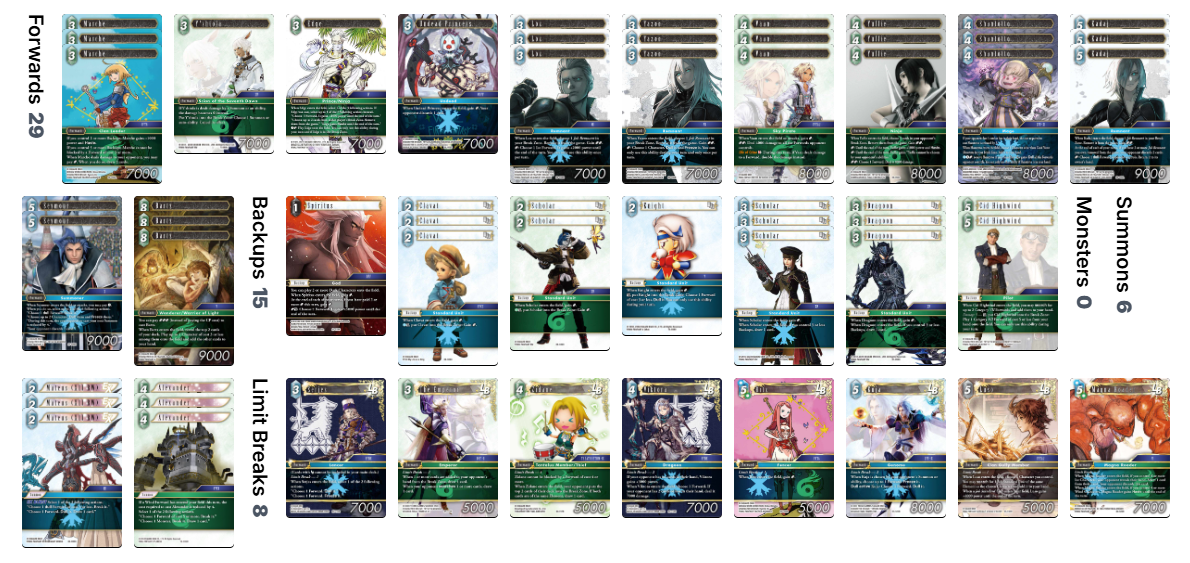
For my Deck B, Wind/Ice Crystals was not my original choice. It was actually the second deck I tested after building MBM, and I was completely crushed at locals. I had considered Mono Wind for a long time because I have been a Storm player since Opus XIV, so it is an archetype I know very well. However, the fact that Mono Wind struggles heavily against decks like Mono Wind mirrors, WoL 7, or Warrior was a major issue.
I changed my Deck B several times, trying WoL 7 and FFXII, but none of them really matched my playstyle. Eventually, I came back to Wind/Ice Crystals, even though I initially thought it was a trap deck (despite seeing it win tournaments overseas). The difference was that the winning lists focused mainly on Crystal-generating Backups, while my first versions included more “fun” cards.
After transitioning to a more serious version of the deck, I was able to make it work and become the champion in Paris.
Regarding the most important cards, Shantotto and Vaan were the MVPs of the tournament. I was able to finish games or simply survive by dulling every Forward with Shantotto twice (against Takhano and Feefye).
Edge was also extremely important, as it gave me the ability to finish games at any moment from the Break Zone—and ultimately helped me qualify for Worlds.
6. What was your reaction when you realized you had won?
I didn’t immediately realize that I had won, until people started gathering around me to congratulate me. Everything that had happened leading up to that victory had affected me so much that it took me some time to fully process what had just happened.
Even as I write these words (July 20th, 2026), I still find it hard to believe that I have qualified for the World Championship.
7. So now you’re qualified for both the European Championship AND the 2026 World Championship, no big deal! How are you processing that? Is there one of the two competitions you’re looking forward to (or stressing about) more than the other?
I will 100% attend both tournaments. There is no reason for me not to go to the World Championship now that I have qualified.
Of course, I am more excited about the World Championship than the European Championship, because it is the ultimate stage for an FFTCG player—and it will also be my first time competing there.
That being said, I am still really looking forward to the European Championship. I want to meet more players from all over Europe, experience the competition, and keep that competitive mindset going.
On top of that, there is also a chance to have the trip covered, which is an opportunity I definitely don’t want to miss.
8. (July 20th, 2026)With Opus 29 dropping, do you already have a card in mind that you’re planning to test? What makes you feel like it has potential?
Editor’s note: Please note that the full set was not yet available at the time of this interview.
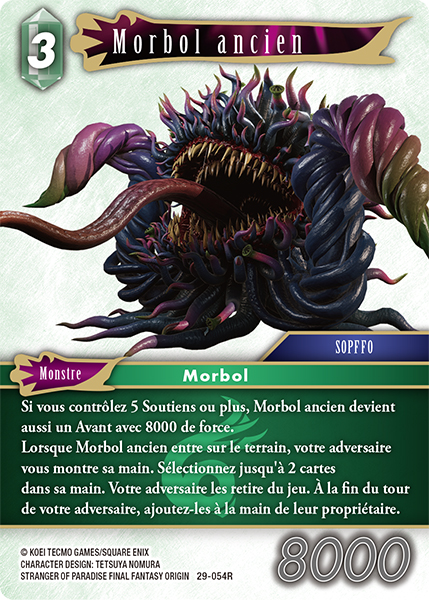
I would say Ancient Morbol (29-054R). First of all, disrupting your opponent’s hand has always been an effective way to slow them down. Having two fewer cards means that, on the turn I play it, I am protected from cards like Amaterasu or Mist Dragon.
Alternatively, I can disrupt my opponent’s game plan and increase my advantage by removing an important Backup or a key combo piece, such as WoL 7 or Taivas.
Another advantage of this card is that you immediately know what your opponent is planning to do. You don’t have to play around uncertainty, unlike back in the days of Zidane (Opus III).
Even though the removed cards return to their owner’s hand at the end of their turn, they still have to be careful not to go above three cards, otherwise they will be forced to discard.
9. A message for the community, or a memorable little moment from the weekend you want to share?
I would like to thank everyone who supported me, those who gave me reassuring looks during the Edge incident, and everyone who came to congratulate me after the final game.
I hope to see you all again soon at future tournaments!
🎤 Meet Alex Hancox – The Paris Local Qualifier Champion
Our second stop in this special interview series takes us to Paris, where Alex Hancox claimed victory at the Paris Local Qualifier, securing his place among the players qualified for the next stage of the FFTCG competitive season.
A familiar and respected name within the FFTCG community, Alex has built a strong reputation through years of competitive experience and dedication to the game. Throughout the tournament, he demonstrated his expertise, preparation, and ability to adapt in high-pressure situations to take home the win.
In this interview, Alex looks back on his journey through the event, his tournament experience, his deck choices, and the key moments that led him to victory.
Discover the thoughts of a seasoned competitor as he shares his perspective on the current competitive scene and his ambitions for the challenges ahead.
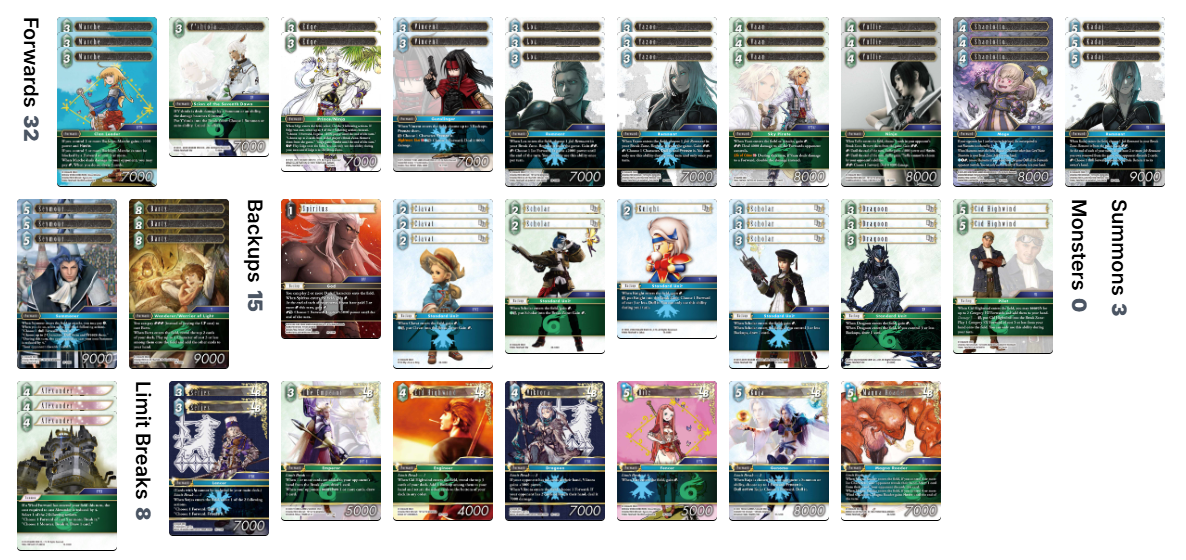
Decklist link : Here
1. Can you introduce yourself briefly? Who’s the person behind the username?
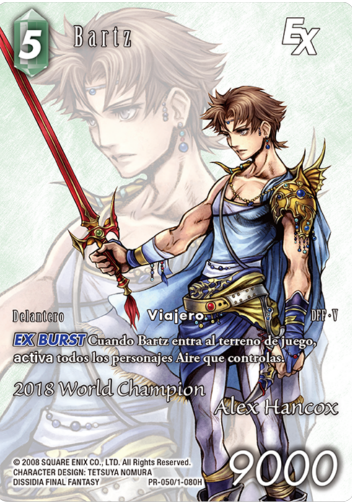
Bonjour, Je m’appelle Alex. I’ve been playing FFTCG since Opus 1 and I really like Bartz.
2. How did your day go? And your toughest match — which one was it, and why?
The LQ went much better than the main event, with a totally undefeated streak of 9-0. I might put that down to a better night’s sleep… It is actually my first time without an automatic European Championship qualification since 2018 as well, so to win it over the Materia Cup weekend alongside the cool trophy provided by the French community felt doubly rewarding.
My toughest match was against my good friend and favourite French FFTCG player Slaksbon! I made a huge snowballing error by not playing a backup one turn so I could force a simple dull/freeze through with Seymour. It was a double error as I hit an EX Burst which was très stupide. The error at least proved to me quite how strong Ice/Wind can be, as when I was sure the game was getting out of my control a lucky string of topdecks including Bartz and Yuffie got me straight back into it, and their sheer size and value generation prevented me taking seven damage.
3. What deck did you play, and which card or combo saved you the most?
I played Ice/Wind, as I only picked it up recently and have been really enjoying it. One of my favourite combos is to use Edge to remove additional Remnants from the break zone in order to trigger and early Kadaj double discard. This play caught a lot of people off guard over the weekend.
4. “You’re now qualified for the European Championship” — how does that feel? Are you nervous about the European Championship?
I still have a few Materia Cups on the horizon to try my luck at getting 1st place, so if they don’t go so well like the previous couple have I will be glad for the final chance. If I need that extra chance I’m sure I will be nervous and hope that my two decks serve me better than they did in Paris :’)
5. (July 20th, 2026)With Opus 29 dropping, do you already have a card in mind that you’re planning to test? What makes you feel like it has potential?
Editor’s note: Please note that the full set was not yet available at the time of this interview.
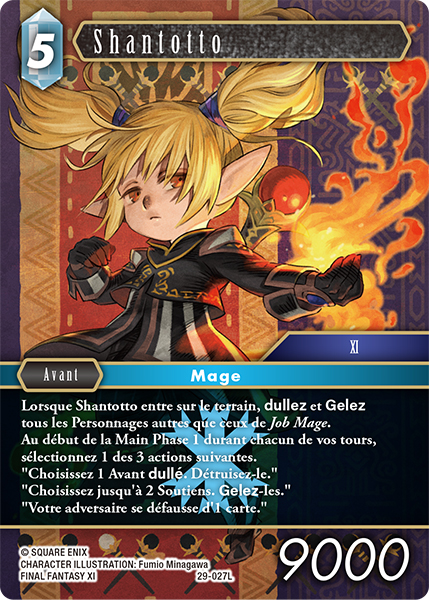
I’m really looking forward to the new Shantotto. Even without the Mage cards supporting her I feel like she is very strong and a great card to put in the various Verstael focused decks I’ve built over the past year with lots of scary 5CP+ forwards. For similar reasons, I also like some of the new FFXIV cards that have been recently spoiled, especially the new retainers so I can give the recent Noctis 27-066L another look.
6. A message for the community, or a memorable story from the weekend?
I am glad to see how well each country has managed to organise their Materia Cups and Local Qualifiers with this year being so quiet on the Square Enix side. The dedication from various community members proves that we could keep this game going forever if they let us. I’m also grateful for the amount of people watching the new videos I have been putting out on Youtube and the effect they are having. It was a pleasure to spend the weekend in Paris as I have not been to France since 2020. Atmos Arena was a great venue for the tournament and the French community were very welcoming for those of us from out of town.
Through these two interviews, we had the opportunity to discover the journeys of Banira and Alex Hancox, two English players who made their mark on the Parisian stage during a weekend filled with outstanding performances.
With Banira’s victory at the Paris Materia Cup and Alex Hancox’s triumph at the Paris Local Qualifier, these two tournaments once again showcased the strength and diversity of the European FFTCG community. Two different competitions, two different approaches to the game, but the same passion and the same goal: pushing their limits against the best players in the competitive scene.
Beyond the results themselves, these events highlight what makes FFTCG so special: the exchanges between players, the journeys across Europe, the moments shared around the tables, and the friendships that continue to grow through every tournament.
We would like to warmly thank Banira and Alex Hancox for sharing their experiences, insights, and memories from this memorable Paris weekend.
Congratulations to both of them for their achievements, and we look forward to seeing what the rest of the FFTCG competitive season has in store!